
To understand the difference between Singleton, Scoped, and Transient service lifetimes it is important to understand the life cycle of Dependency Injection. The life cycle of Dependency Injection (DI) refers […]
A Step-by-Step Guide to Configuring Entity Framework in Your .NET Web API Project
Entity Framework (EF) is an Object-Relational Mapping (ORM) framework that enables developers to interact with databases in a more efficient and convenient way, rather than having to write raw SQL […]

Static vs Non-Static Classes in C#: Understanding the Differences and Use Cases
In C#, a class is a blueprint for creating objects, providing initial values for member variables or properties, and implementations of member methods or functions. A class can have fields […]
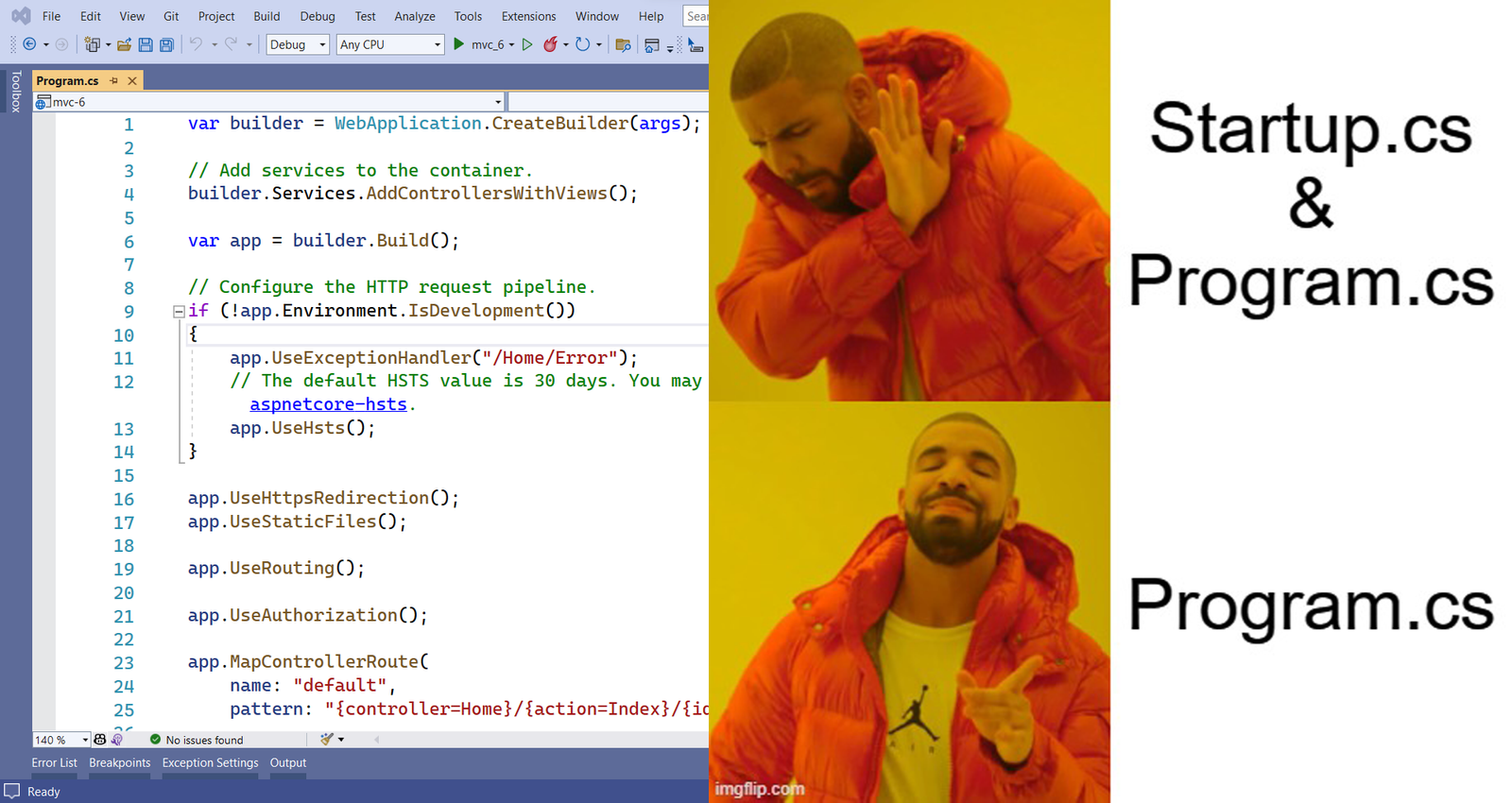
Migrate from ASP.NET Core 5.0 to 6.0
This article explains to update an existing ASP.NET 5 project to ASP.NET 6. I am going to use a fully-functional .NET 5 MVC application to show how you can do it step by step.
NUnit Testing Framework Guide – That()
nUnit is an open-source unit testing framework for the .NET Framework and Mono. By using nUnit you can test your Services, but also your Controllers, Actions, etc. It was initially […]